Fibers from this plant will be used to make bags and other items. Valle del Mezquital, Hidalgo
Mexican Artisans Battle World Capitalists for Survival
By D. Johnson
Communities of Mexican artisans are fighting for their lives against world capitalists. I refer to the artisans of the Valle del Mezquital. They are poor and somewhat disenfranchised, living a few hours north of Mexico City, with dreams of placing their arts and crafts in markets throughout the land.
However, according to Espíritu Madero, treasurer of the Comité de Artesanos de Santiago de Anaya (Artisan Committee of Santiago de Anaya), in Valle del Mezquital, world businessmen, primarily Chinese, are crushing this dream. They are sending employees to various communities throughout the Valle del Mezquital for the sole purpose of plagiarizing the many different artisan designs found there. They then send these designs back to China to be mass produced with low-quality materials. Next, the final inferior and unauthentic cheap products are shipped back to Mexico and throughout the world to be sold in markets as authentic Mexican art.

It is in these markets that the artisans of Mezquital wish to have their products placed. However, they simply don’t have the resources nor the governmental support to distribute their works. For years, but to no avail, they have been petitioning the state government of Hidalgo to help them place their products in stores and commercial centers. Meanwhile, the markets are being filled with mass-produced knock-offs made across the ocean in factories.
The same type of pirating occurred in Paracho, Michoacan, to the Purépecha indigenous people. They have been making guitars by hand for hundreds of years, using techniques and traditions handed down over time, and they’ve been selling these fine pieces of art to visitors from around the world for decades.
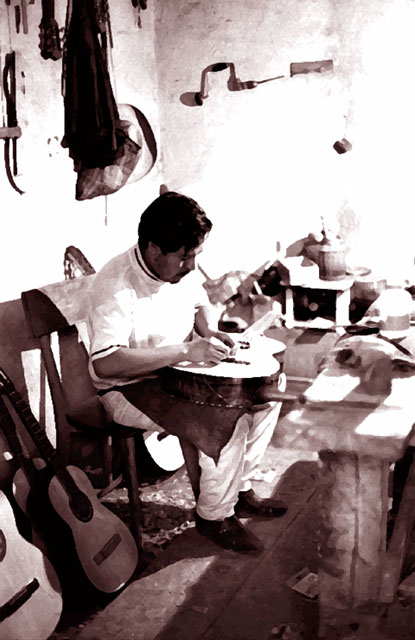
Then, the Chinese got involved. Businessmen copied the designs and began mass-producing the guitars in China, which they then shipped back to Mexico to be sold alongside authentic Purépecha guitars. The knock-offs cost much less than the real deal because they are cheaply made, and this price disparity has forced the market to allow the fakes in. And now, Paracho produces 4000 authentic guitars a year, down from 120,000 in the year 2000.
The storybooks of Mexico are replete with these types of cases, and the result is always the same: Mexican artists give up their centuries-old crafts because they can’t compete with the knock-offs, which means they can no longer make money to support their families. So, some migrate to bigger cities to find work; in some cases, all the way to the United States or Canada. And all the while, the rich tradition that is Mexican Art is not lost but replaced by mass-produced substitutes lacking soul.
Currently, the artisans in the Valle del Mezquital are seeking to get their designs patented. A patent will at least give them legal “on-the-books” protection against the profiteers, although it will probably have little effect on the reality of the market. Patents and other intellectual property protections are effective only when consumers can’t buy the cheaper fakes, which, in Mexico, they do because they are ubiquitous.
 openingspress.com